No. 01
Understand what's being measured
Not the diagnosis — the extra care, supervision and support your child needs compared to a child of the same age without their condition. Frame every answer around that comparison.
Topic guide · DLA
Disability Living Allowance for children exists because caring costs more — in time, in energy, in money. The form is long and the questions are hard to answer from memory. A record you kept as you went changes everything about filling it in.
The reality
DLA is awarded on care and supervision needs — how much more help your child needs than another child of the same age. Which means the form asks you to write down, in detail, the mornings that took ninety minutes, the night wakings, the supervision that never switches off.
Most parents fill it in from memory, late at night, underselling everything because the hard days blur together. The parents who find it least painful are the ones who had a record before they started.
In practice
DLA for children applies in England, Wales and Northern Ireland; in Scotland, Child Disability Payment has replaced it for new claims. The approach is the same either way.
No. 01
Not the diagnosis — the extra care, supervision and support your child needs compared to a child of the same age without their condition. Frame every answer around that comparison.
No. 02
Even two weeks of notes — what help was needed, when, for how long — gives you real examples instead of vague impressions. Include nights.
No. 03
Needs that vary are still needs. Say how often the hard days happen and what they involve; don't average everything down to a misleading 'usually fine'.
No. 04
School letters, professional reports, an EHCP if there is one. You don't need a diagnosis to claim — evidence of needs is what counts.
No. 05
Contact's DLA guides are written specifically for parent carers, and Citizens Advice will help you complete the form. Their experience of what decision-makers look for is worth borrowing.
This page is general information, not benefits advice. Rules and rates change — check gov.uk for current details, and Contact's parent-carer guides for help with your claim.
Inside Heedli
The form is yours to fill in — Heedli's job is to make sure you're not doing it from memory.
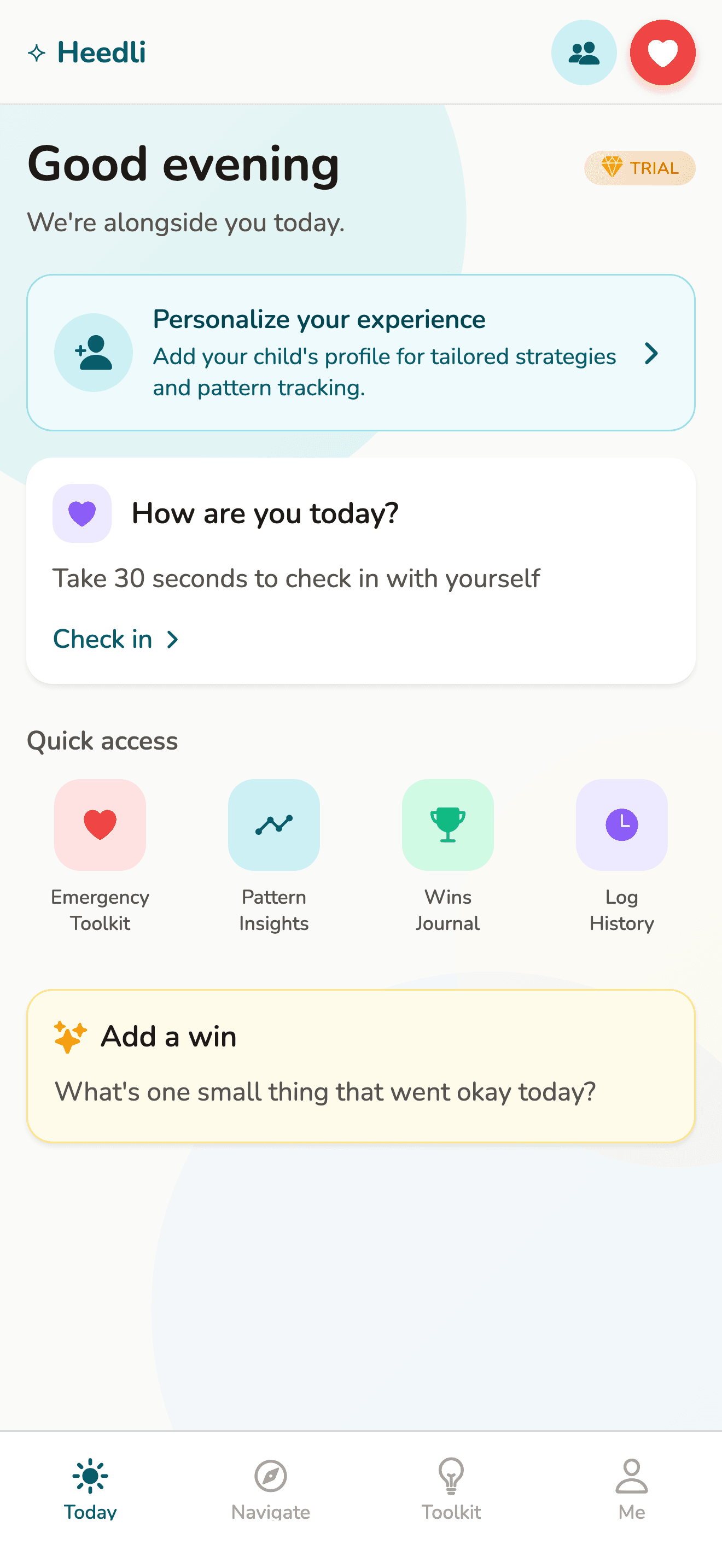
Daily check-ins capture care needs, sleep, eating and hard moments as they happen — dated, searchable, and there when the form asks 'give an example'.
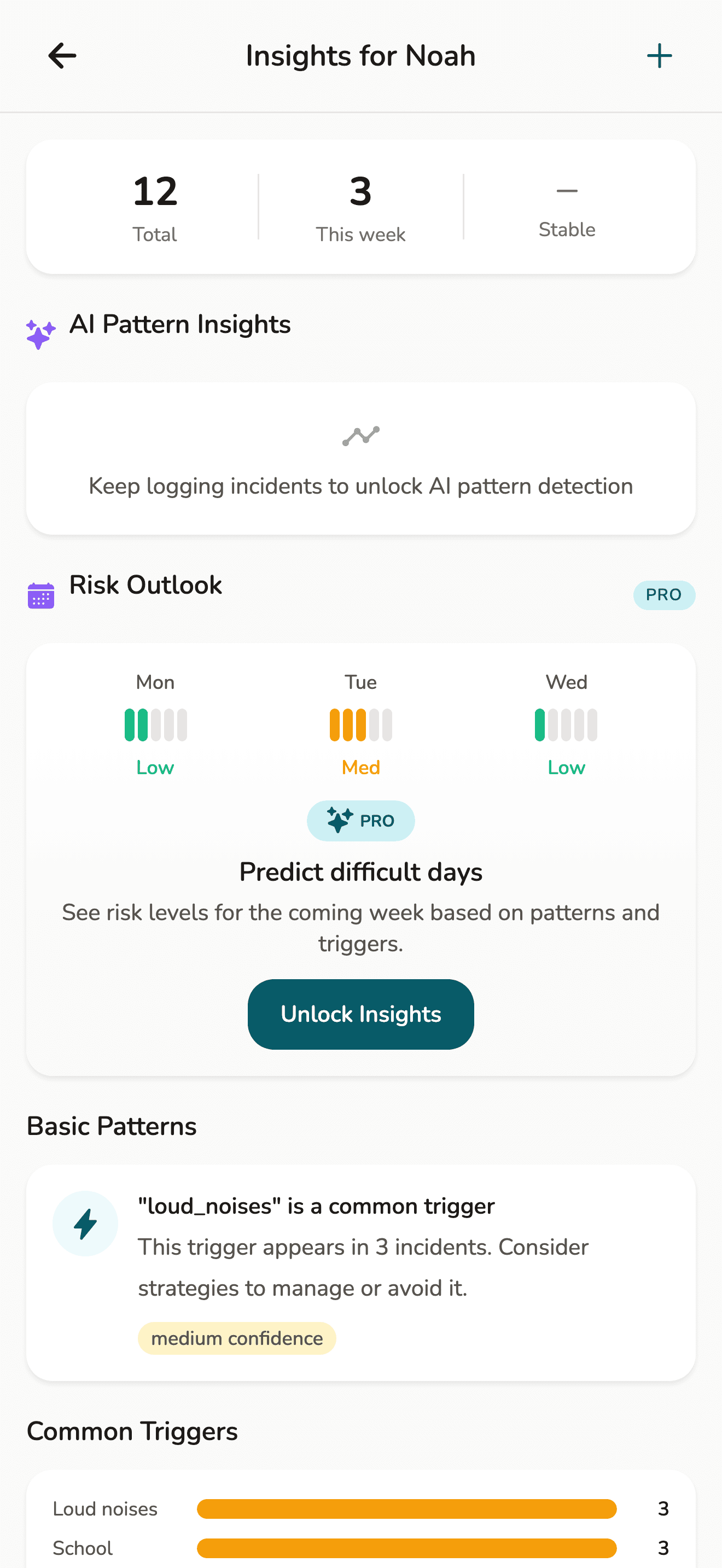
Insights turn months of notes into frequencies: how often the night wakings, how often the supervision, what the hard days have in common.
Export a clean report of needs and examples for whoever is helping you with the claim — or for the renewal, when it all comes around again.
Awards end and renewals sneak up. Heedli's calendar holds the dates so they don't arrive as a surprise.
Common questions
No. DLA is awarded on care and mobility needs, not on diagnosis. Many families claim — and are awarded — while still on an assessment waiting list.
A diary of day-to-day care needs with real examples, plus anything professional you already have: school letters, reports, an EHCP. The strongest claims show how often extra help is needed and what it actually involves.
New claims for children in Scotland are for Child Disability Payment, which replaced DLA there. The evidence you'd gather is essentially the same.
No — and be wary of anything that offers to. Heedli gets your record and examples ready; you (or an adviser from Contact or Citizens Advice) complete the form itself.
Keep reading
Free to download on iOS and Android. Built for daily life, school meetings and hard moments.
Questions? We answer every email.