No. 01
Know who does what
The class teacher owns the day-to-day. The SENCO coordinates support across the school. If your child has, or might have, additional needs, ask for a meeting with both.
Topic guide · School & SENCO
The difference between a school meeting that changes things and one that doesn't is rarely how strongly you felt. It's whether you could show the pattern — dated, specific, and impossible to file under 'one-off'.
The reality
Teachers and SENCOs mostly want to help, and they are stretched thin. What gets lost in between is the pattern: the Sunday-night dread, the after-school fallout the classroom never sees, the strategy that worked in October and quietly stopped.
Anecdotes are easy to sympathise with and easy to park. A dated record — this happened, this often, this is what helped — is much harder to park. That's the shift.
In practice
Every mainstream school in England must have a SENCO — a special educational needs coordinator. Support starts well before any plan or diagnosis, through SEN support and the graduated approach.
No. 01
The class teacher owns the day-to-day. The SENCO coordinates support across the school. If your child has, or might have, additional needs, ask for a meeting with both.
No. 02
Corridor chats evaporate. A short email after every conversation — 'thanks for meeting, here's what we agreed' — builds the record that later processes will ask for.
No. 03
'Mornings have been hard' invites sympathy. 'Refused school 7 of the last 20 mornings; here's what each one looked like' invites a plan.
No. 04
SEN support is meant to run as a cycle — assess, plan, do, review. Leave every meeting with what will be tried, who is doing it, and when you'll review it together.
No. 05
Ask for the school's SEN information report, involve the SENCO's line management or governors if needed, and lean on your local SENDIASS service for free advice. Staying factual keeps every door open.
Inside Heedli
Heedli was built for exactly this handover — from what your family lives, to what a school can act on.
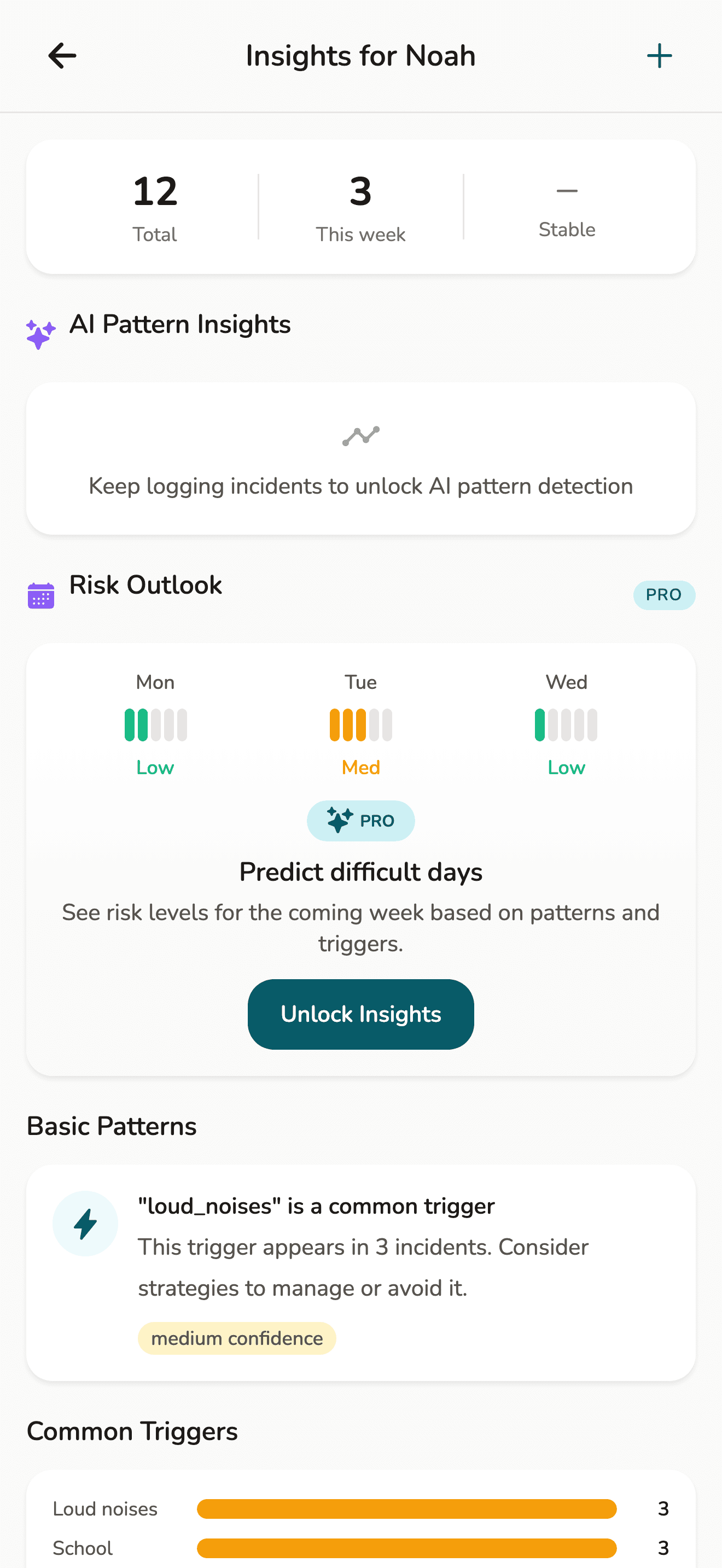
Daily check-ins and incident logs become a dated timeline. Before the meeting, you're not trying to remember — you're choosing what to show.
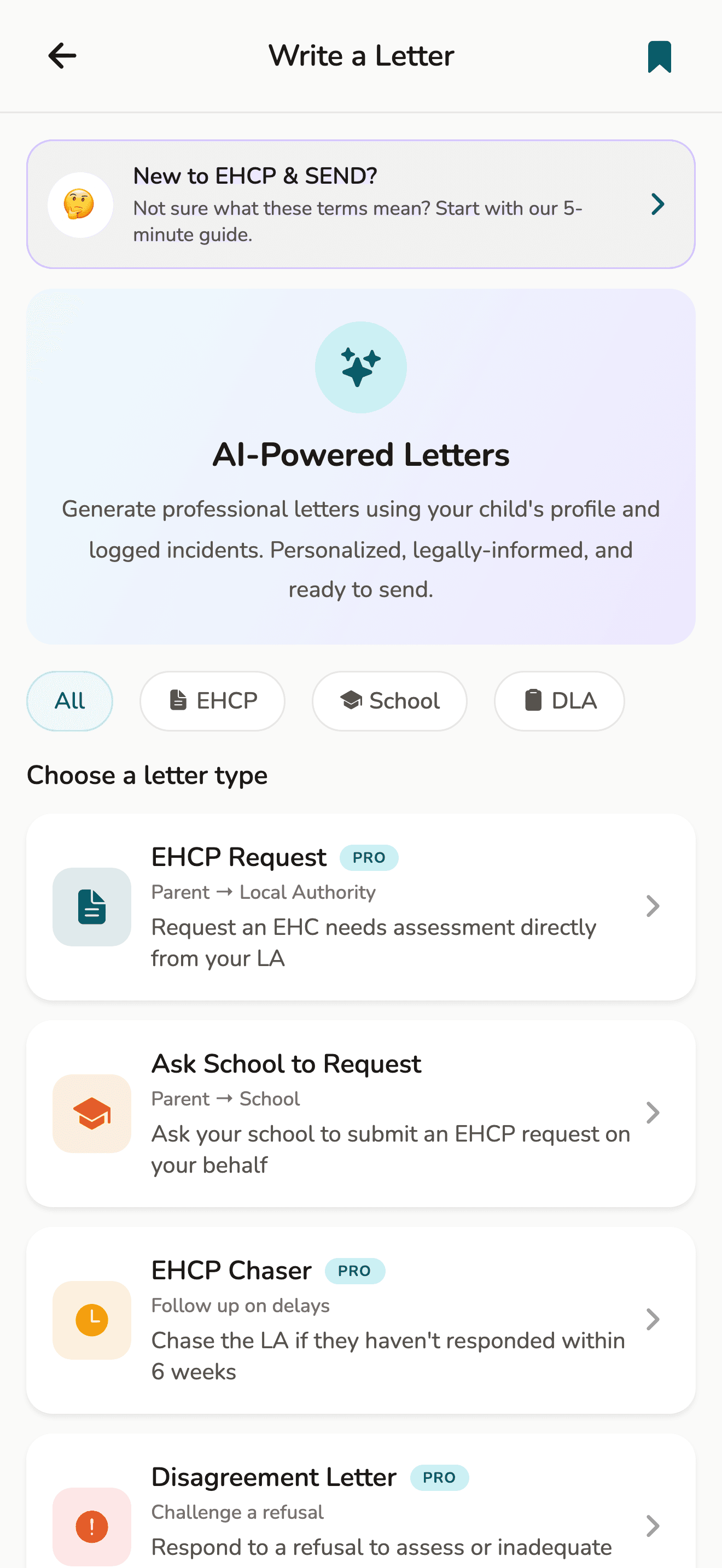
AI-assisted drafts for that follow-up email or the more formal letter — in plain, calm English you edit before sending.
Export a clean summary of patterns, strategies and progress for SENCO meetings, SEN support reviews and annual reviews. You decide what's included.
Meeting notes, review dates and school documents together — so 'what did we agree last time?' has an answer.
Common questions
The special educational needs coordinator — a qualified teacher responsible for coordinating SEN support across the school. Every mainstream school in England must have one. They're usually your main contact for anything beyond the classroom.
No. Schools must provide SEN support for children who need it, with or without a diagnosis, and long before any EHCP. If you think your child needs more help, you can ask the SENCO about SEN support today.
A short, dated summary: what's been happening, how often, what's been tried, what helped. One page beats a folder. End by agreeing next steps and a review date.
In writing, about facts, without heat. 'The record shows X, we'd like to try Y, can we review in six weeks?' keeps everyone on the same side — and builds the paper trail in case you ever need more formal routes.
Keep reading
Free to download on iOS and Android. Built for daily life, school meetings and hard moments.
Questions? We answer every email.